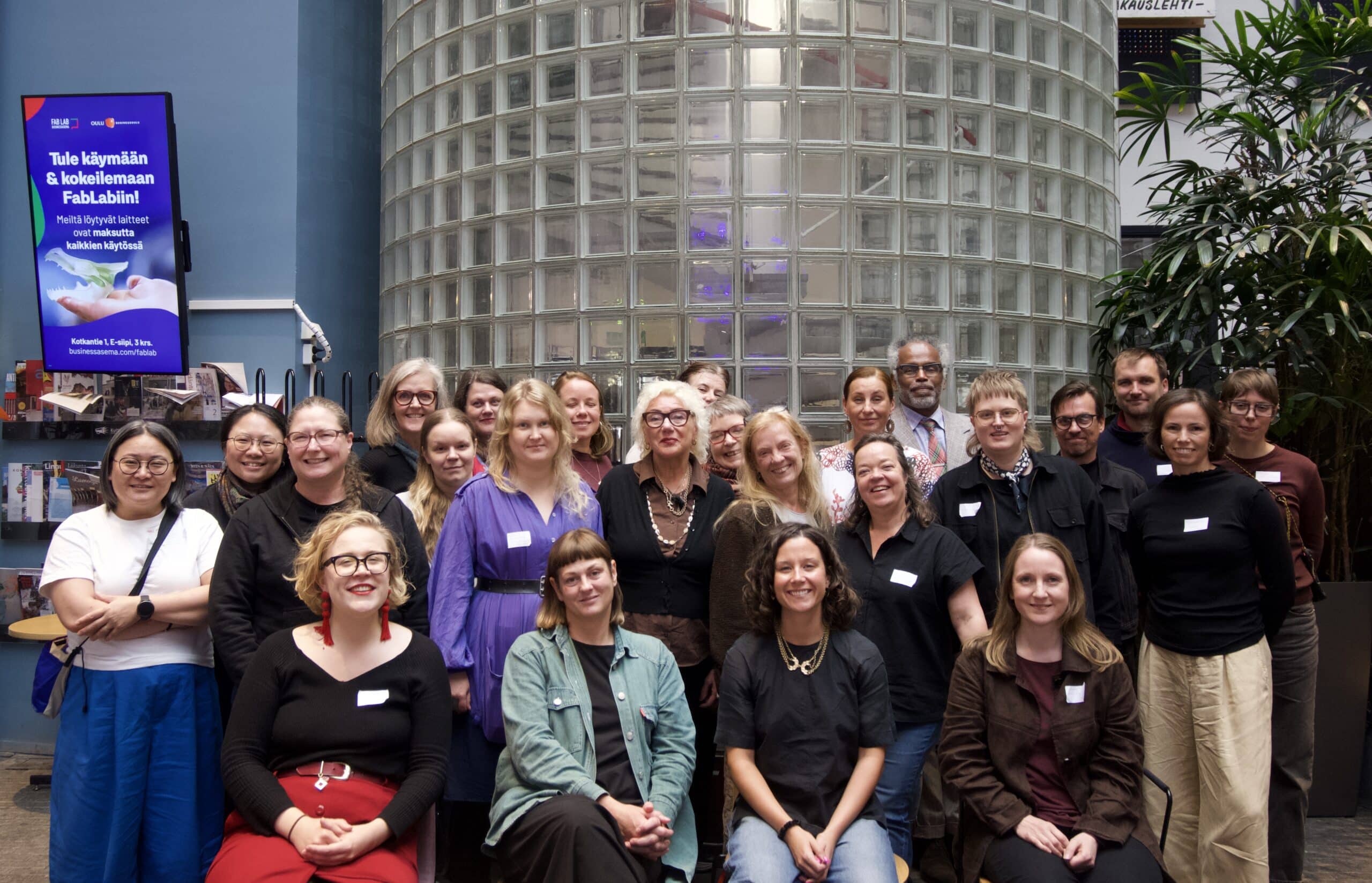
FAIRE members gathered in Oulu for the Annual Member Meeting 2026. We had a schedule of networking, reflection and forward planning for Finland’s national artist residency network. This year, we collaborated with Arts Centre Valve, who hosted us on day 1, and attended the ’Tracks + Practices’ symposium on micro residencies and slow travel on day 2 and 3.
Day 1 focused on networking, member spotlights, international residency research and a hands on evaluation workshop shaping FAIRE’s 2027 priorities. Here’s a recap of what was discussed during the FAIRE meeting, and how you can still have your say.
PART 1: Update on FAIRE – Membership and Communications
The focus of the day was a session on plans for the network in 2027, split between two threads: a possible membership approach, and an update on FAIRE’s communications strategy.
Why talk about membership now? As FAIRE’s activities have grown, the group discussed whether it’s time to introduce a clearer, more transparent membership process. Following research into approaches to membership by other international networks (eg IETM, Res Artis, TransArtists) we want to introduce a clear route to becoming a FAIRE member which enables transparency, consistency and helps us to map who belongs to the network.
What we discussed:
- What membership could mean in practice: who might be eligible, what organisations would commit to, and what FAIRE would offer in return (such as national representation, international visibility and potential benefits eg residency mapping and benchmarking data).
- Prompted by recent loss in funding, the members discussed if a membership fee would make sense and, if so, what form (eg flat fee, sliding scale, or voluntary contribution).
- Next steps are to draft a membership criteria, an application form and a membership agreement which would be used as starting points for further consultation in Autumn 2026.
We would aim to roll out a new process in early 2027.
On the communications side: the team shared early statistics from FAIRE’s website and social media channels, and opened a discussion on how members currently promote their residency opportunities, which channels work best, and what forms of communication support members would most value from FAIRE going forward.
You can see the presentations for this section here.
PART 2: Member Spotlights
In the afternoon we heard from four FAIRE members:
Hub Feenix
Artists at Risk (AR) / Ecologists at Risk (ER)
Pihatto Residency
Artborg AiR
You can see their presentations here.
PART 3: Learning from the TASA Impact Study
A highlight of the day was a presentation from Hsiao-Chi Chu, a doctoral researcher at Taipei National University of the Arts and Visiting Fellow at IIAS, Universiteit Leiden. Chu shared progressing research from the TASA network in Taiwan: Reframing Artist Residencies — Sustainable Impact and Institutional Strategies in Taiwan and Across Asia Contexts.
The research asks a simple question: not ”how many artists?” or ”how many exhibitions?”, instead ”what is the long-term cultural value of residencies?” Chu argued that prevailing, output-biased evaluation such as exhibition counts, audience numbers, or final reports can’t register what matters most: relationship-building and trust, cultural continuity, artist wellbeing, and the long-term health of local art ecosystems.
Three questions frame the research:
How regional context shapes residency sustainability
How sustainability is embedded in everyday governance and practice, and
How evaluation can move beyond outputs to capture relational, intangible and long-term value.
Central to this is a reframing of sustainability itself. Not organisational longevity or financial survival, but a residency’s role as ongoing cultural infrastructure, evaluated across six dimensions: Culture, Economy, Society, Dynamic Art System, Personal Wellbeing, and Civic Engagement.
This framework went on to directly shape the afternoon’s workshop. You can read Chu’s summary report in English here.
PART 4: 2027 Focus – Evaluation
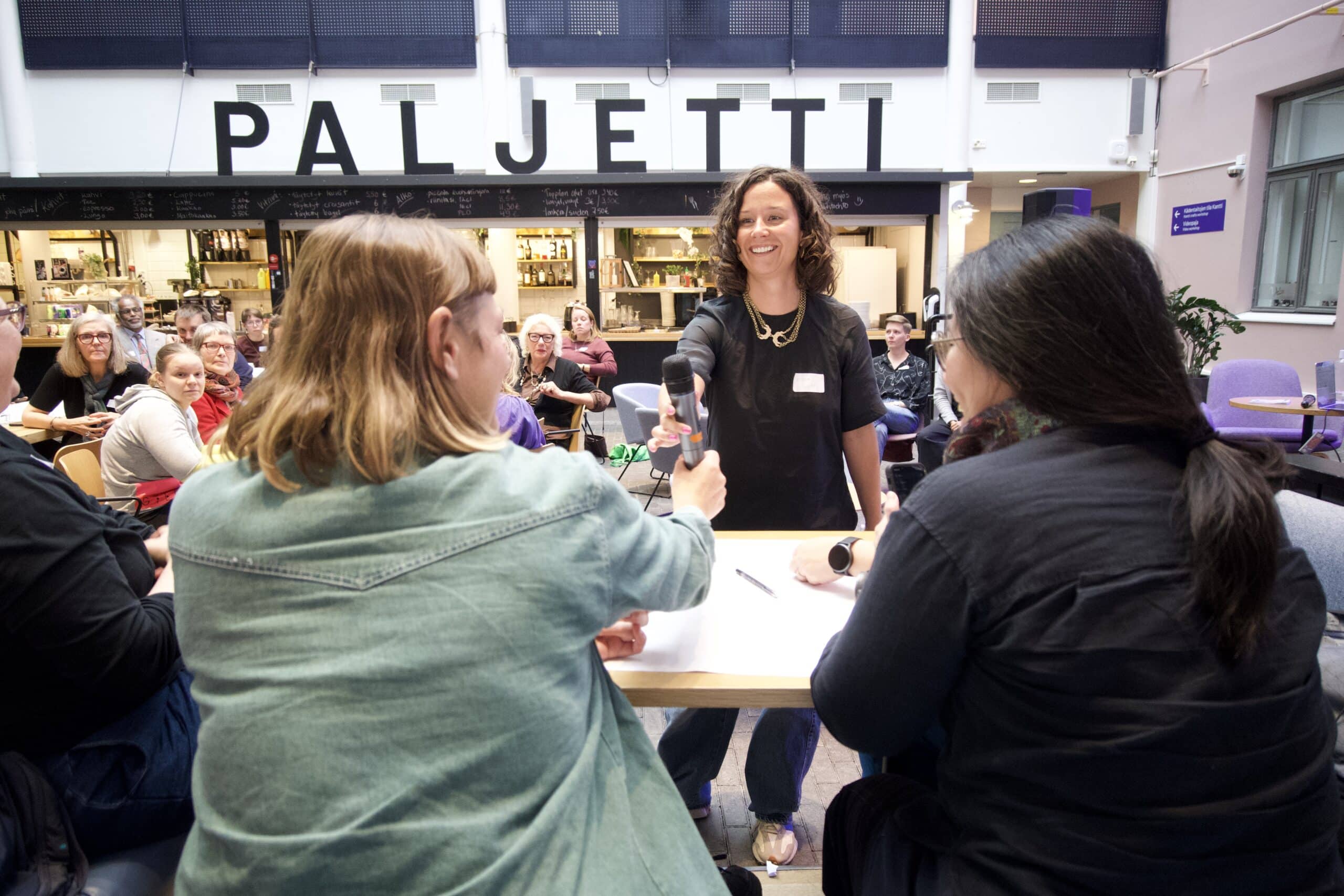
Building on the TASA research, members worked through a hands-on workshop under the theme ”What should we measure if we want to understand the real value of Finland’s residency ecology?”
By the end of the session, the group had mapped the network’s current confidence and expertise in evaluation, identified existing evaluation practice across member organisations, agreed priority themes for future research and begun designing what a Finland-wide impact study could look like using the TASA six-dimension framework as a starting point.
In small groups, members discussed what they already measure well, what’s hardest to evidence, and drafted questions a future national research study should answer: from how residencies affect rural communities, to what happens to artists five years on, to the ”invisible labour” residencies perform. The session closed with a reflective prompt: a ”postcard” moment when a residency clearly made a difference that no report or KPI could ever capture.
What’s Next
The day wrapped with a look ahead: refining the membership proposal and communications strategy over the coming months, continuing to build out FAIRE’s evaluation and research agenda with the TASA framework in mind, and working toward a possible Finland-wide impact study. Look out for more detail on each of these in future updates.
Have questions about anything covered at the meeting, or want to get involved in the membership, communications or evaluation workstreams? Get in touch with the FAIRE team.